Lead a card, follow suit, win the round. Trick-taking is among the oldest ideas in card design, and its simple loop still holds lessons for anyone building a game.
Before there were mana costs or turn phases, there was the trick. Trick-taking is one of the oldest structures in card games, and it is still worth studying if you design your own. The rules fit in a few sentences, yet the decisions never run out.
How a trick works
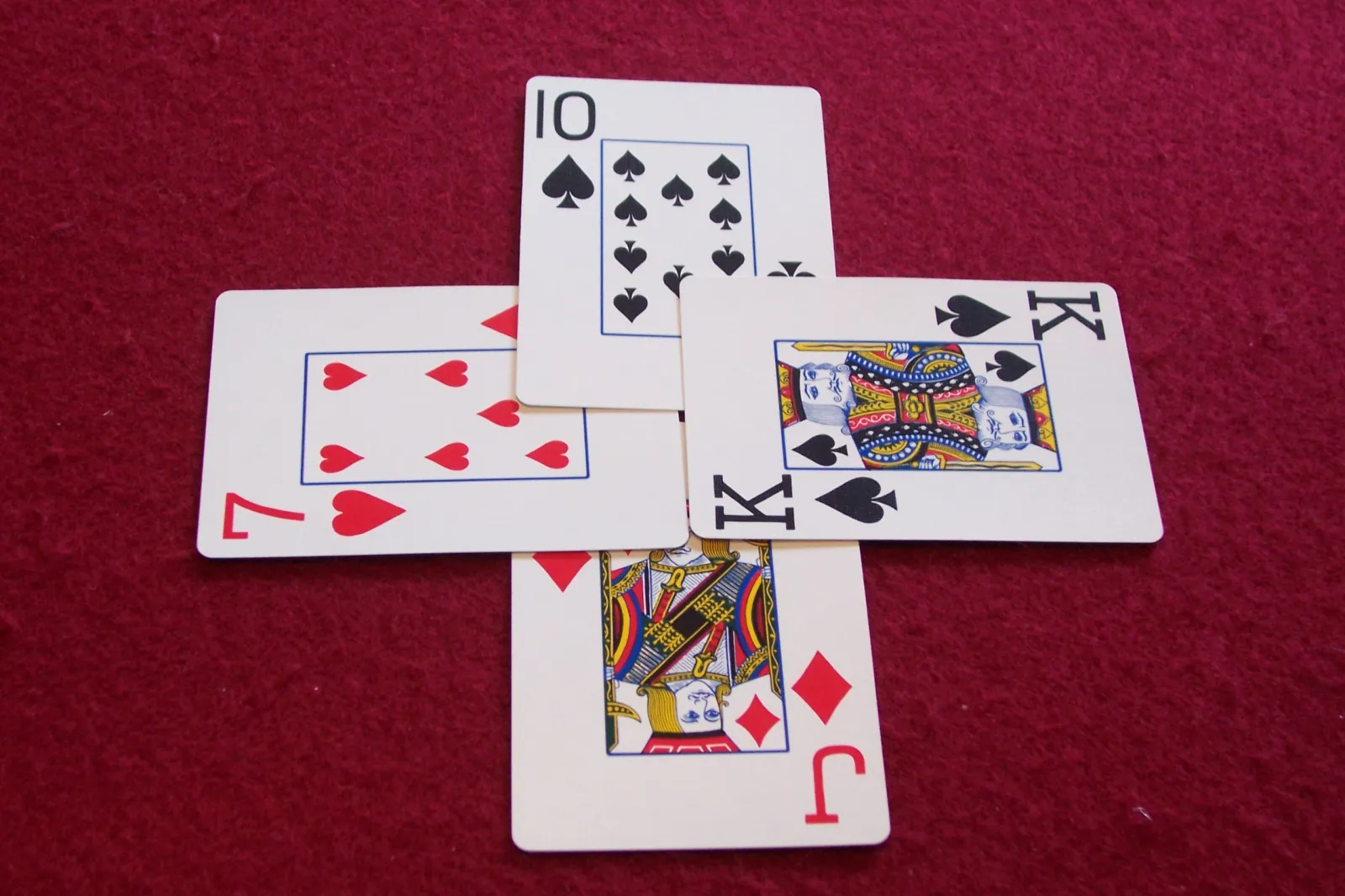
A hand is played as a series of small rounds called tricks. One player leads a card, and everyone else adds one in turn. Usually the highest card of the suit that was led takes the trick, unless a trump suit is in play, in which case the highest trump wins. The winner collects the cards and leads the next trick.
The key constraint is following suit: if you can match the suit that was led, you generally must. If you cannot, you may discard a card from another suit, or in most modern trump games play a trump, known as a ruff.
That one restriction does a lot of work. Leading a long suit keeps opponents from following. Leading a short suit lets you empty it from your hand, so you can trump later. And the last player in a trick sees everything that came before, so they can win or lose it by the smallest margin they need.
Three ways to score the same loop
The same loop supports very different games, depending on what the table cares about. In plain-trick games such as whist, spades and contract bridge, only the number of tricks counts. In point-trick games such as pinochle and skat, the values of the cards you capture matter. In trick-avoidance games such as Hearts, the goal flips: you want to take as little as possible.
Hearts shows how much a small scoring change can do. Each heart is one penalty point, thirteen in all, and in the Black Lady version the queen of spades adds thirteen more. Common modern rules have each player pass three cards at the start of a hand. A player who captures every penalty card can shoot the moon, either subtracting the maximum from their own score or adding it to everyone else's. The mechanic is the same as whist's, but the tension is completely different.
A long lineage
Early card games were trick-taking games, according to the overview on Wikipedia, which traces them to ancient China, from where they spread west in the early second millennium. Playing cards are first mentioned in Spain in 1371. David Parlett is cited there as dating the oldest known European trick-taking game, Karnöffel, to a mention in 1426 in Nördlingen, Bavaria. Trumps became common across Europe during the 15th century, and bidding for the trump suit is credited to ombre in the 17th century.
Whist is the ancestor most players know. The Complete Gamester described its relative Ruff and Honours in 1674, and in 1742 Edmond Hoyle published A Short Treatise on the Game of Whist, which became the standard text for the next hundred years. Whist has no bidding, so partners learn about each other's hands only through the cards they play. Bridge added bidding and a dummy hand, and by the early 1890s was quickly replacing whist in clubs.
Lessons for designers
A few things explain why the trick has lasted. It needs no special components, only suits and ranks. It rewards reading your opponents, because every card played is information. And it gives designers many dials: how trumps are chosen, whether bidding exists, whether you score tricks, points or penalties, and whether you play alone or in partnerships.
If you are building a game in TCG Studio, you do not have to copy any of this directly. But the lesson carries over. A strong mechanic is one clear constraint, like follow suit, with enough room around it for players to make interesting choices. Try sketching a trick-based combat round for your own set, and see which scoring dial makes it feel right.
Sources
Trick-taking game - Wikipedia · Whist - Wikipedia · Hearts (card game) - Wikipedia)